
Introduction
ZDAAS LLC is a Glen Burnie, Maryland IT company that’s been around since 2008. They’re SBA-certified as a Woman-Owned Small Business (WOSB/EDWOSB) and work with everyone from federal agencies to local governments to non-profits. Staffing, software, consulting, and project management cover a lot of ground. They also hold a GSA Multiple Award Schedule (47QTCA18D008G) for IT hardware and supplies.
One of their education-sector clients was running an accountability and reporting system for nutrition programs, applications, claims, oversight, state and federal reporting. It handled the job. But regulatory pressure kept building, and it was becoming clear the setup wasn’t going to cut it much longer. ZDAAS brought in Sawaat Corporation for Data & AI Consulting to figure out what needed to change.
That assessment turned into something bigger. Sawaat built an Azure-based lakehouse platfrom using Microsoft Fabric and paired it with an ongoing operations model. Not a theoretical modernization exercise, an actual working platform the client could rely on as compliance demands, and program needs kept growing.
Business Context
The client’s system ran on Microsoft .NET with proprietary components. It is connected to a wide range of external systems, financial management, administrative tracking, data warehouses, supply chain, and federal services. ZDAAS managed the operations and maintenance: fixing production issues via work orders, handling security, tuning performance, modifying source code, running SQL Server and Oracle databases, configuring SharePoint, developing on the web side.
A lot of data came out of all that work. Logs, metrics, interface outputs, reports, scattered across sources that didn’t talk to each other well. Individually things functioned. But getting a cross-system view? Connecting claims trends to oversight data, or pulling financial interface information into real-time reports? Not really practical. Regulations weren’t getting simpler either. The client needed better governance, tighter security, and analytics that could actually keep pace. So ZDAAS brought Sawaat in.
Strategic Objectives
A few things had to happen. Data from O&M activities, interfaces, and reporting needed to live somewhere central right now it was too fragmented to be useful. Security, performance, and compliance all needed work. The client also wanted to be ready for real-time analytics and eventually AI capabilities, given where legislation was pushing things. And none of it could cause meaningful downtime. Government standards had to be met throughout the world.
Sawaat started with a discovery phase going through the .NET setup, SQL and Oracle databases, SharePoint, and the various interfaces then built a migration roadmap from there.
Solution Overview
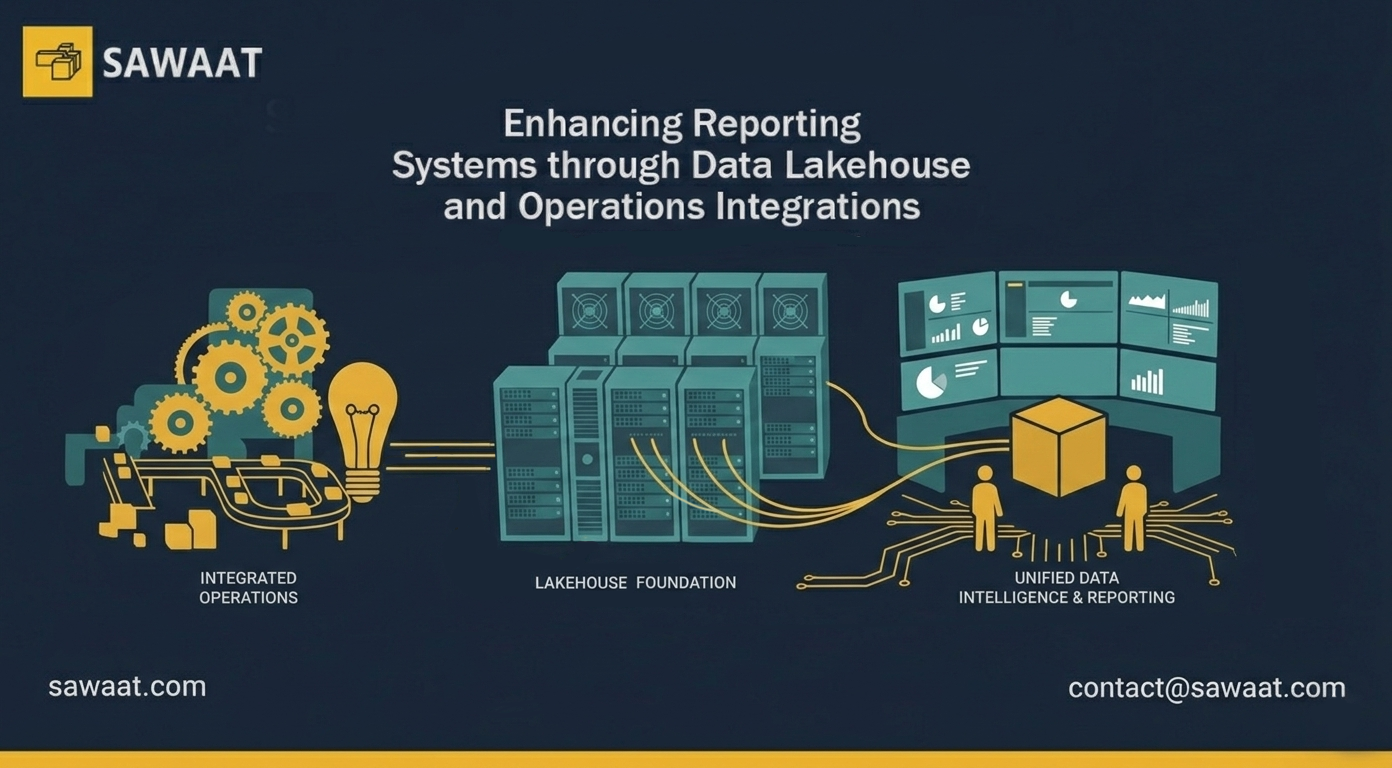
Sawaat implemented a complete Azure-based lakehouse using Microsoft Fabric as the core platform for storage, orchestration, analytics, and data processing. This unified environment ingested data from the client’s systems, enabling structured governance and insights.
-
- Data Storage and Ingestion: Fabric Lakehouse acted as the central repository, handling structured data (e.g., SQL tables from claims), semi-structured logs (e.g., interface metrics), and unstructured documents (e.g., reports).
-
- Processing and Transformation: Data transformation workloads were executed using Fabric’s native Spark engine for ETL on work order data, performance metrics, and interface integrations.
-
- Orchestration: Fabric Pipelines managed workflows, scheduling batches and streaming updates, such as near real-time claims processing.
-
- Analytics and Reporting: Power BI integrated with Fabric for dashboards on oversight activities and compliance, with separate workspaces for dev, test, and prod to facilitate business owner management.
-
- Operations Layer:Sawaat designed and implemented the system with built-in capabilities for 24/7 monitoring, SLA enforcement, cost optimization, and security controls, enabling efficient management by the client.
Implementation Approach
Following Sawaat’s 5-step consulting model, the project began with ZDAAS’s input during discovery to map the client’s environment.
-
- Discovery and Blueprint: Assessed interfaces (e.g., financial systems, data warehouses) and O&M workflows, designing an Azure migration roadmap with zero-downtime strategies.
-
- Data Ingestion: Fabric pipelines pulled from SQL Server, Oracle, SharePoint, and external APIs, directing to the lakehouse.
-
- Architecture Build: Deployed Fabric Lakehouse; configured ACID transactions for reliability and vector support for future AI readiness.
-
- Governance Setup: Implemented Fabric policies for access controls, data lineage, and compliance (e.g., audit-ready for federal standards), with automated quality gates.
-
- Operations Enablement: Set up monitoring for pipelines, dashboards, and performance; enforced gates for data intake, quality, consumption, and security.
-
- Phased Rollout: Started with O&M logs and work orders, expanded to claims/interfaces, then reporting; included workshops on lakehouse best practices.
Sawaat ensured knowledge transfer to ZDAAS for sustained support and long-term platform ownership.
Operational Impact
Things improved noticeably. Unified logs made it faster to connect production issues to what was causing them, which sped up work order resolution. Real-time analytics helped with security configurations and catching interface problems earlier. SQL and Oracle data became easier to navigate centrally, and SharePoint dashboards got better, more useful, better integrated with calendar and email.
Documentation and testing got less painful too. SME inputs fed into automated help content and test reports, cutting manual effort. Web development, both .NET and SharePoint, got smarter with data-driven insights behind the dashboards. Around the clock, monitoring handled incidents, held data quality SLAs, and kept Azure spend in check. Business owners worked out of Power BI production workspaces directly, with dev and test environments available when they needed to work on something without affecting what was live.
Conclusion
The client came out of this with something they didn’t have before a unified view of data that had previously been scattered across applications, claims, oversight, and reporting. ZDAAS was able to offer a stronger O&M and enhancement capability. As a result, SAWAAT created Azure Fabric platform solution that gave the client compliance, scalability, and room to grow, built for a regulatory environment that keeps raising the bar. And because knowledge transfer was taken seriously, ZDAAS has what it needs to keep the platform running and evolving well past the engagement itself.
